
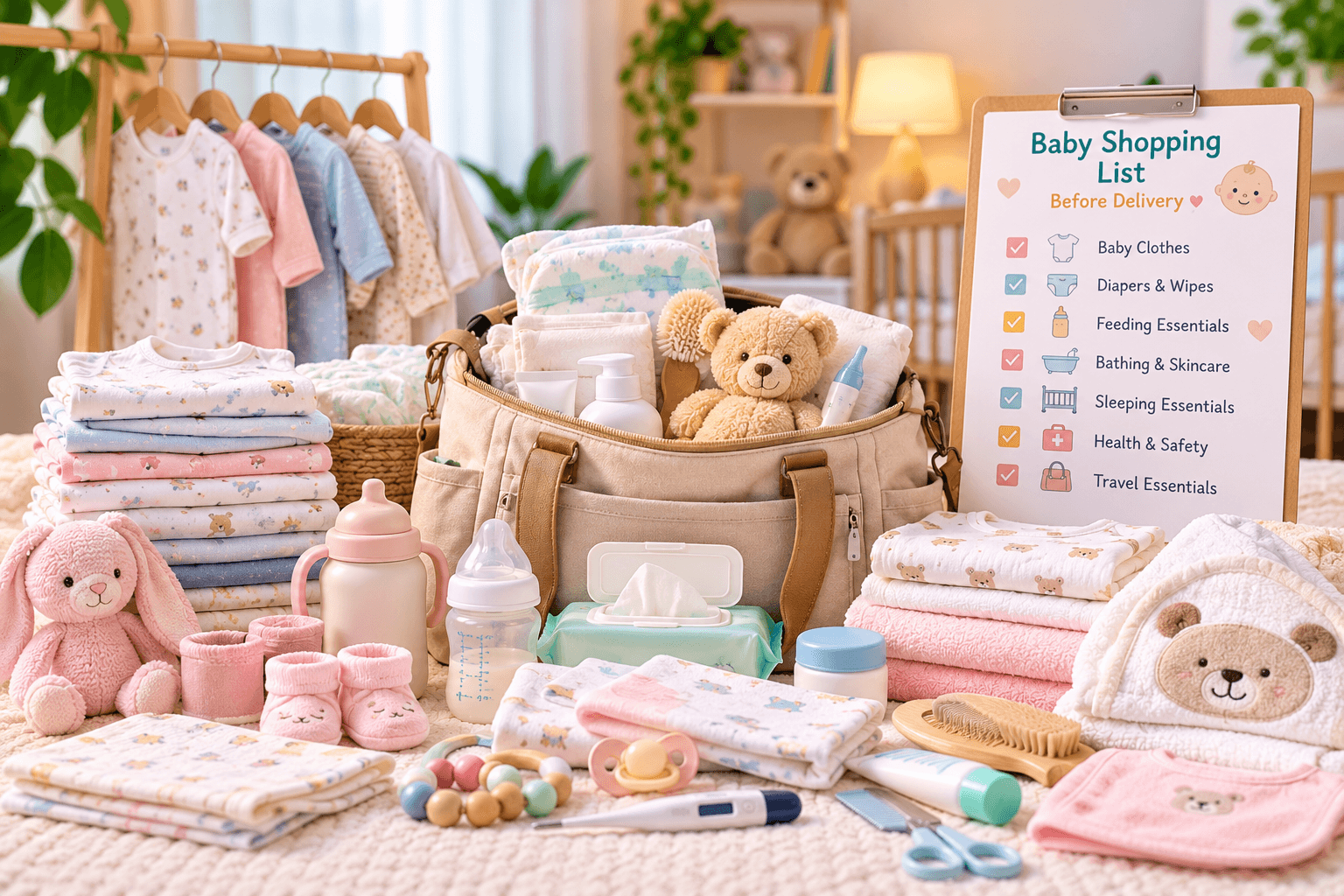
Baby Shopping List for First-Time Parents: What to Buy Before Delivery
Admin13 Oct 2026published
#Baby Shopping List | Newborn Essentials | First-Time Parents | Baby Products Checklist | Baby Essentials Before Delivery
Baby Shopping List for First-Time Parents: What to Buy Before Delivery
Preparing for your baby's arrival is an exciting experience, but shopping for a newborn can feel overwhelming for first-time parents. With so many baby products available, it can be difficult to decide what is essential and what can wait. Creating a practical baby shopping list before delivery helps parents stay organised, manage their budget and prepare a comfortable environment for their little one.
1. Baby Clothing Essentials
Start with comfortable, soft and breathable clothing suitable for newborns. Your shopping list can include cotton onesies, sleepsuits, vests, socks, mittens and weather-appropriate caps. Choose clothes that are easy to put on and remove, and avoid buying too many outfits in the smallest size because babies grow quickly during their first few months.
2. Diapers and Changing Supplies
Diapers are among the most important items to prepare before delivery. Depending on your preference, you can choose disposable diapers or reusable cloth diapers. Also consider purchasing a changing mat, soft cotton cloths, wipes and a convenient diaper bag. Keep the baby's skin clean and dry, and change diapers regularly to help prevent irritation.
3. Feeding Essentials
Feeding supplies depend on how you plan to feed your baby. Useful items may include burp cloths, bibs and, if needed, feeding bottles and appropriate cleaning supplies. Parents who plan to breastfeed may also consider nursing-friendly clothing or other suitable accessories. Speak with your paediatrician or healthcare professional for guidance on feeding and newborn nutrition.
4. Safe Sleeping Products
Prepare a safe sleeping space before bringing your baby home. A cot or bassinet with a firm, flat mattress that meets applicable safety standards is a useful essential. Babies should be placed on their backs for every sleep, and their sleeping area should remain free of pillows, loose blankets, stuffed toys and other soft objects.
5. Bathing and Skincare Products
Newborns need gentle everyday care. Consider buying a soft towel, washcloths, a baby bathtub if required, and a mild cleanser suitable for newborn skin. You may also need a soft baby brush and infant nail-care tools. Choose products carefully, avoid harsh fragrances and follow professional advice when dealing with skin irritation or other concerns.
6. Baby Health and Safety Essentials
A digital thermometer and suitable infant-care supplies can help parents manage everyday needs. Before delivery, identify a paediatrician and keep important healthcare contact details accessible. Avoid purchasing medicines for routine use without professional guidance. For travelling by car, prepare an appropriately fitted, rear-facing infant car seat that meets local safety requirements.
7. Travel and Outing Essentials
A practical diaper bag helps parents carry diapers, spare clothes, wipes and feeding supplies when leaving home. Depending on your needs, you may also consider a suitable stroller or baby carrier. Always check age and weight recommendations, product instructions and safety requirements before using travel equipment.
8. How to Shop Smart Before Delivery
Begin with a checklist divided into essential and optional items. Set a budget, compare product quality and safety information, and prioritise items you will need immediately after birth. You can postpone purchasing toys, extra clothing and other non-essential products until you understand your baby's needs better. Ask experienced parents for suggestions, but remember that every family has different preferences.
Final Thoughts
A well-planned baby shopping list makes preparing for your newborn simpler and less stressful. Focus on comfortable clothing, diapers, feeding supplies, safe sleeping arrangements, hygiene products and essential health and travel items. You do not need to buy everything at once; prioritising practical and safe products can help you stay within budget. Explore Kids Infinite to discover useful baby-care products and essentials for your growing family.